SB-102 Transceiver · Volume 1
Overview
The Heathkit SB-102 is the last of Heath’s vacuum-tube SB transceivers and the most refined of them. It is a five-band single-sideband and CW transceiver for 80 through 10 metres, built around a pair of 6146 beam tetrodes running 180 watts PEP input, and it tunes from a sealed, factory-aligned, all-transistor Linear Master Oscillator that Heath fitted in place of the tube oscillator of its SB-100 and SB-101 predecessors. It first appeared in the summer 1970 catalogue at $380, stayed in the catalogues until 1974, and was the rig from which the far longer-lived HW-101 was cost-reduced.
It was sold, like almost everything Heath made, as a kit: eight printed circuit boards, a pre-formed wiring harness, twenty tubes, the sealed LMO, and a manual of about 170 numbered pages plus fold-outs. What the builder ended up with was a station transceiver that its makers compared, without much modesty, to anything “at any price”, and that owners half a century later still call the poor man’s Collins.
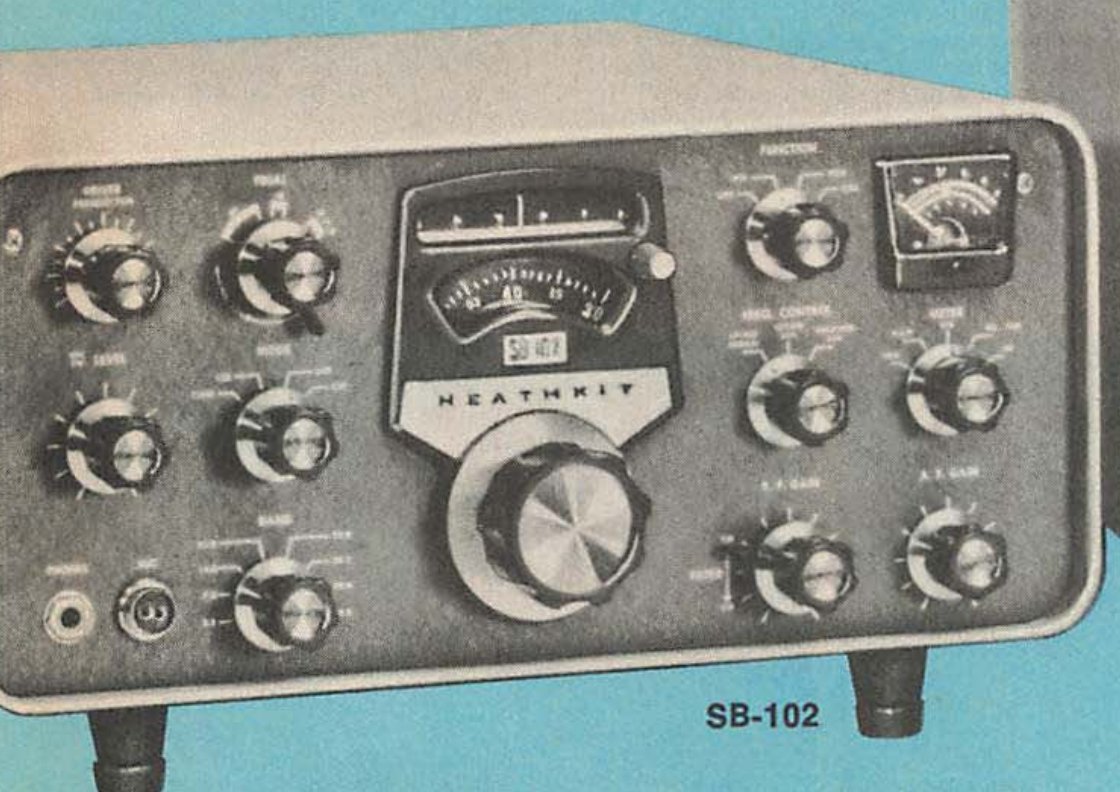
1.1 What it is
The SB-102 is a double-conversion filter-type SSB transceiver. The sideband is generated once, at a fixed 3.395 MHz intermediate frequency where a crystal lattice filter can be sharp and cheap, and then heterodyned to the operating frequency in two steps: first against the LMO, which tunes 5.0 to 5.5 MHz, and then against a crystal-controlled heterodyne oscillator with one crystal per band. The receiver runs the same chain backwards through the same filter, the same first IF amplifier and the same two oscillators, which is what locks transmit and receive to the same frequency. The circuit is walked through stage by stage in How It Works.
The headline figures below come from the specification pages of the assembly manual (pages 131 to 134 of edition 595-1058-06). The full specification is reproduced in the Reference volume.
Table 1 — What it is
| Bands | 3.5–4.0, 7.0–7.3, 14.0–14.5, 21.0–21.5 MHz; 10 metres in four 500 kHz segments, 28.0–30.0 MHz |
| Modes | LSB, USB, CW, plus a TUNE position |
| DC power input | 180 W PEP on SSB (continuous voice); 170 W on CW at 50 per cent duty cycle |
| RF power output | 100 W on 80 through 15 metres; 80 W on 10 metres, into 50 Ω |
| Finals | Two 6146 in parallel, class AB1 |
| Receiver sensitivity | Less than 0.35 µV for 10 dB (S+N)/N on SSB |
| Selectivity | 2.1 kHz at −6 dB, 5 kHz at −60 dB; 400 Hz with the optional SBA-301-2 CW filter, front-panel switched |
| Carrier and sideband suppression | 50 dB and 55 dB below single-tone output |
| Stability | Less than 100 Hz per hour after 10 minutes’ warm-up |
| Dial | 1 kHz divisions; 100 kHz per turn of the circular dial; visual accuracy within 200 Hz, backlash under 50 Hz |
| Tubes and solid state | 20 tubes including the 6146 pair and an OA2 regulator; 18 diodes; a 2N3567 in the LMO supply; the sealed transistor LMO |
| Size and weight | 14⅞ × 6⅝ × 13⅜ inches; 17½ lb |
| Power required | 700–850 V at 250 mA, 300 V at 150 mA, −115 V at 10 mA, 12 V AC or DC at 4.76 A, from an external HP-23 or HP-13 series supply |
Three of those lines are the SB-102’s own. The 10-minute warm-up figure is half the 20 minutes Heath specified for the SB-100 and SB-101, and it comes directly from the solid-state LMO. The 0.35 µV sensitivity figure replaced the “less than 1 microvolt for 15 dB” of the earlier models, a change Heath credited to “new, hotter receiver circuitry”: a 6HS6 RF amplifier in place of a 6AU6. And the FREQ CONTROL switch in the specification’s list of front-panel controls gives the SB-102 something no HW transceiver ever had: a choice of transceiving on the internal LMO, on a crystal, or on an external SB-640 LMO, or splitting transmit and receive between them.
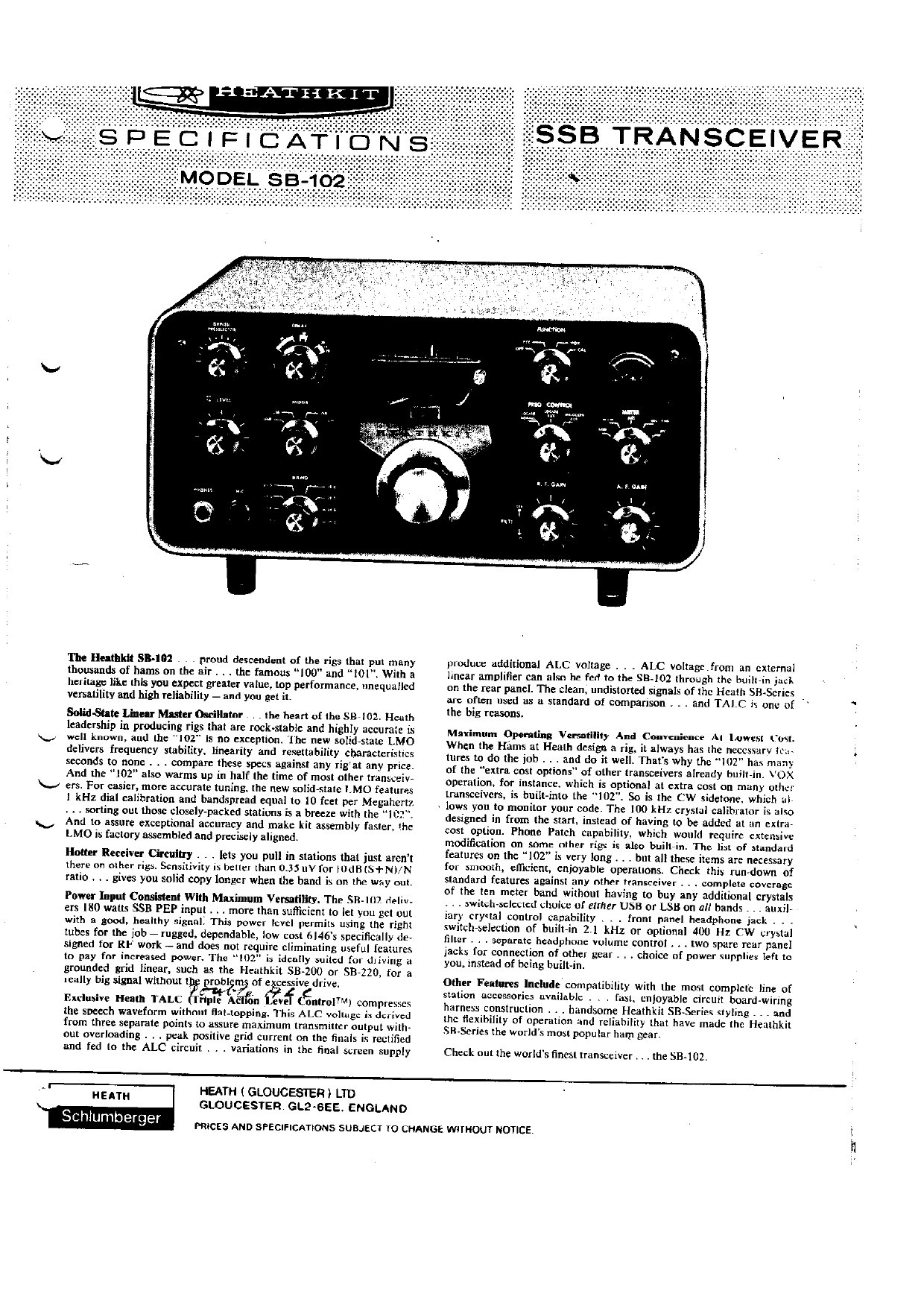
1.2 Where it came from
The SB-102 is the third generation of a transceiver that grew out of Heath’s early-1960s answer to the Collins S-Line. The site history dive tells that story, including the scrapped first design of the SB-100 (The Golden Age); what matters here is the sequence of models and what changed at each step.
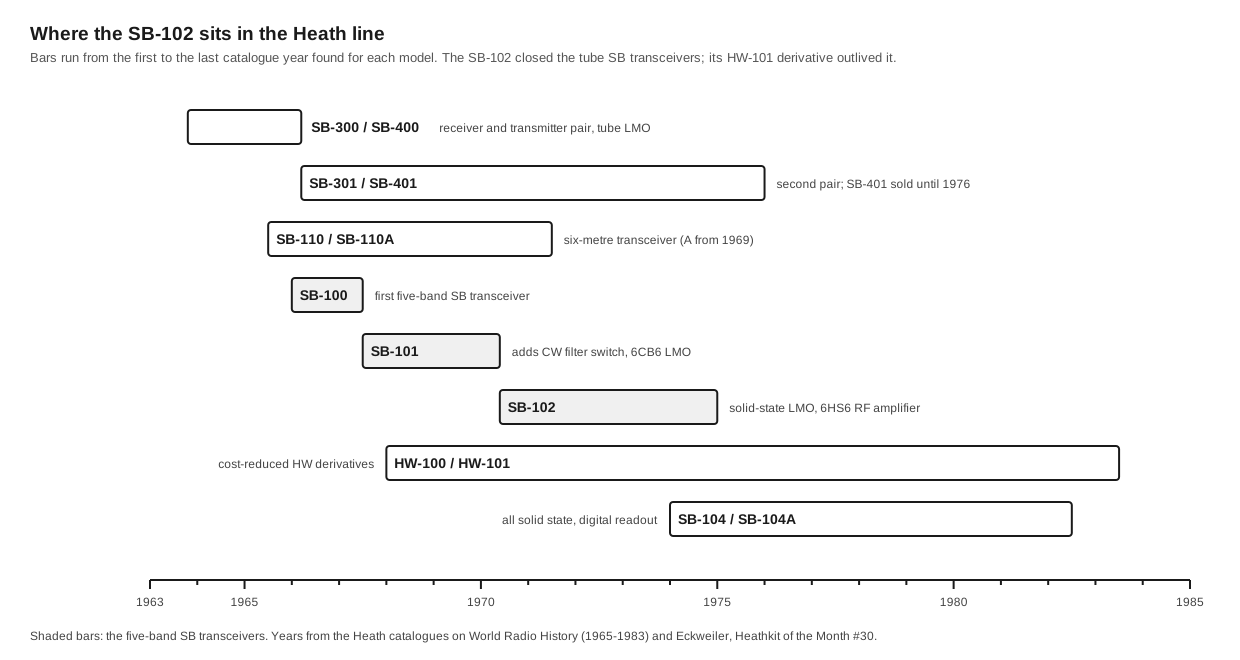
The SB-300 and SB-400 (1963–64). Heath’s SB system began as a separate receiver and transmitter that could transceive together, each tuned by a pre-built, pre-calibrated Linear Master Oscillator covering 5.5 down to 5.0 MHz, with every other oscillator crystal-controlled. Bob Eckweiler’s overview of the line credits the LMO for SB-series stability that was “comparable with quality radios of the same era” (Heathkit of the Month #30).
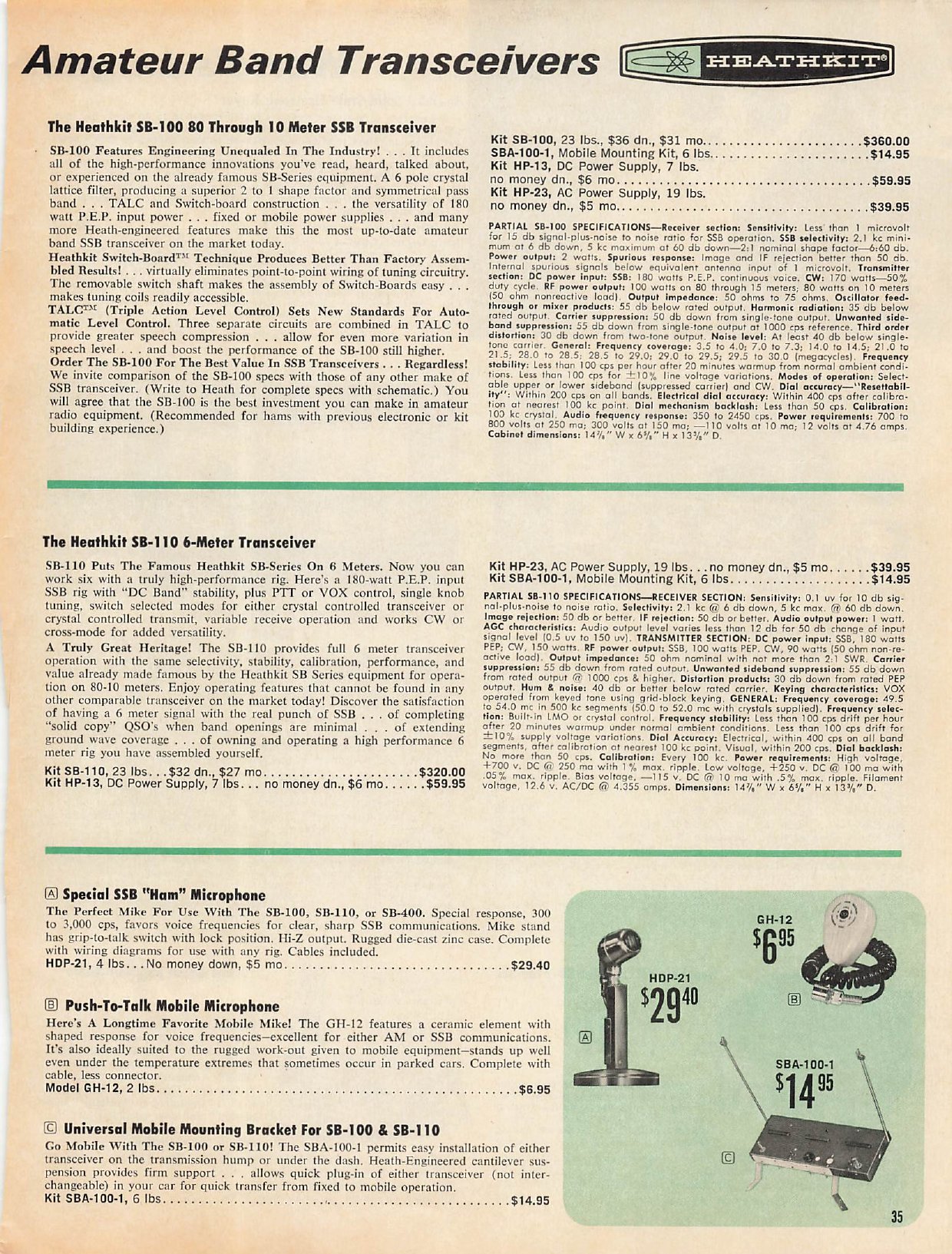
The SB-100 (announced 1965–66, $360). The first SB transceiver put the receiver, transmitter and one LMO in a single cabinet with an external power supply: the HP-23 for fixed-station use or the HP-13 for mobile. Its tube LMO, Heath part 110-32, used a 6BZ6 (W5RKL/WB8JKR, Heathkit HW-101 and SB-10x Restoration and Troubleshooting, table 12). Sources give its date as 1965; the restoration manual, quoting a published history of the line, says it was first announced in a last-minute “New Product News” insert in the 1966 catalogue. The earliest catalogue page found for this dive is the March 1966 supplement 800/62, which prices it at $360 alongside the six-metre SB-110 at $320. The same $360 is still printed in the 1967 general catalogue.
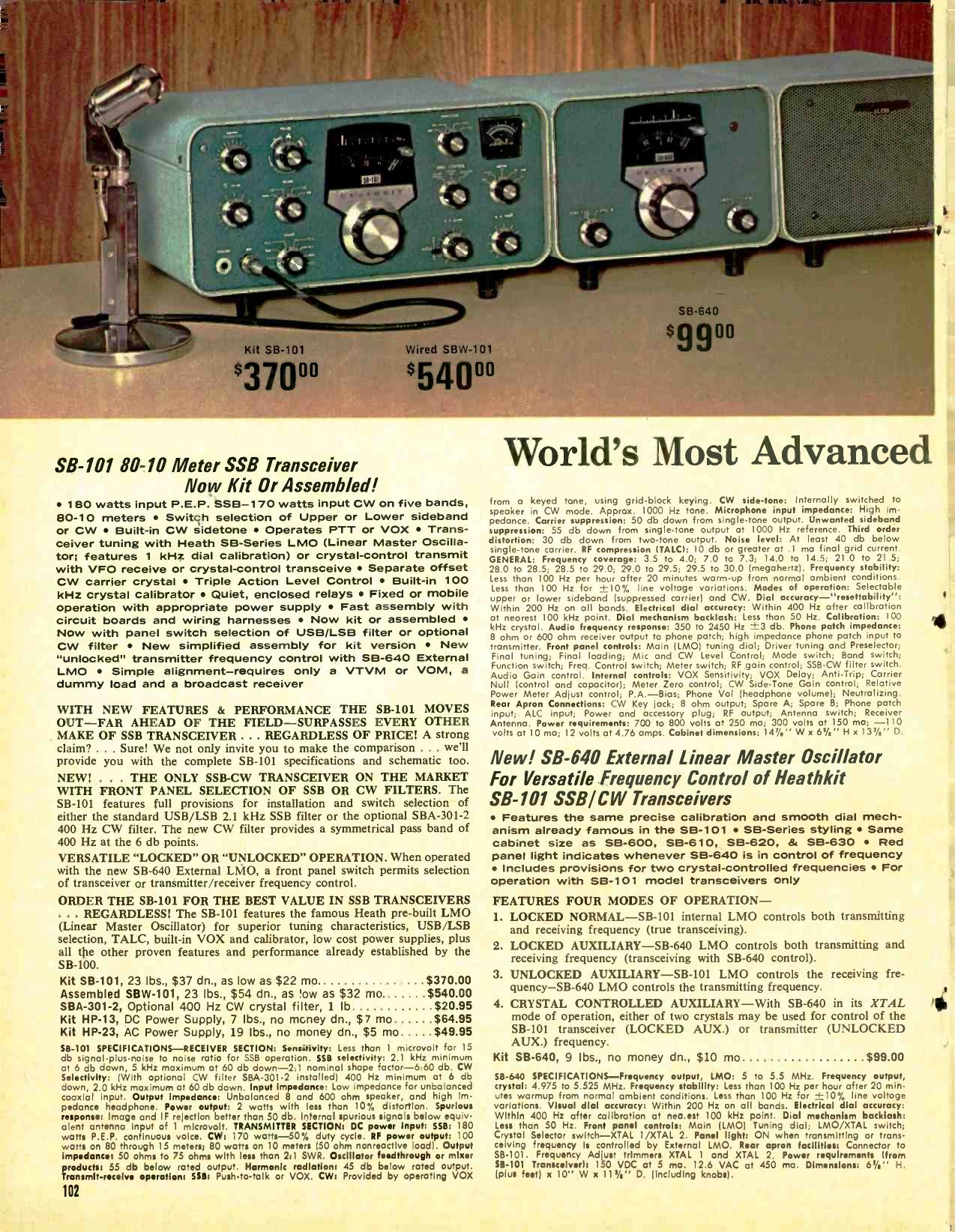
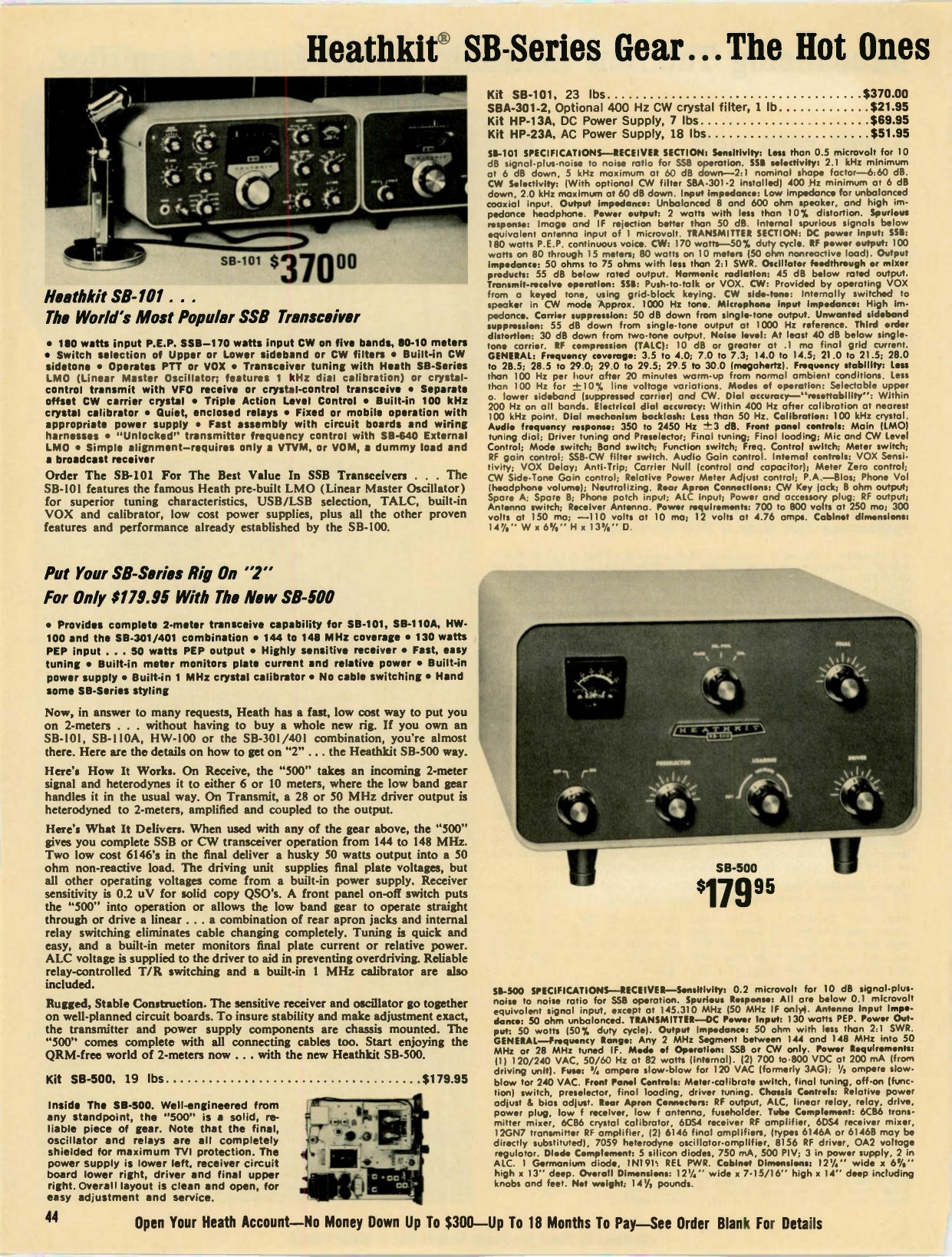
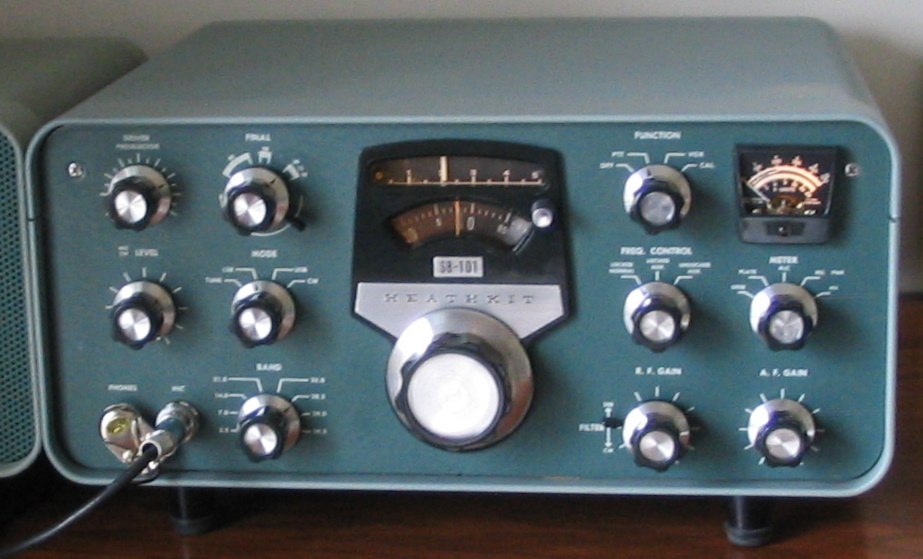
The SB-101 (1967, $370). The SB-101’s main change was front-panel selection between the 2.1 kHz SSB filter and an optional 400 Hz CW filter, the SBA-301-2, together with a smaller filter package and a new LMO, part 110-40, built around a 6CB6. Its frequency-control switch, which on the SB-100 had read LMO, XTAL and AUX, became LOCKED NORMAL, LOCKED AUX and UNLOCKED AUX, and Heath designed the SB-640 external LMO to plug into it. The 1968 catalogue offers the SB-101 as a kit at $370 or factory-wired as the SBW-101 at $540, with the SB-640 at $99; the kit price was unchanged in the 1969 and Winter 1970 catalogues (1968 catalogue, p. 102).
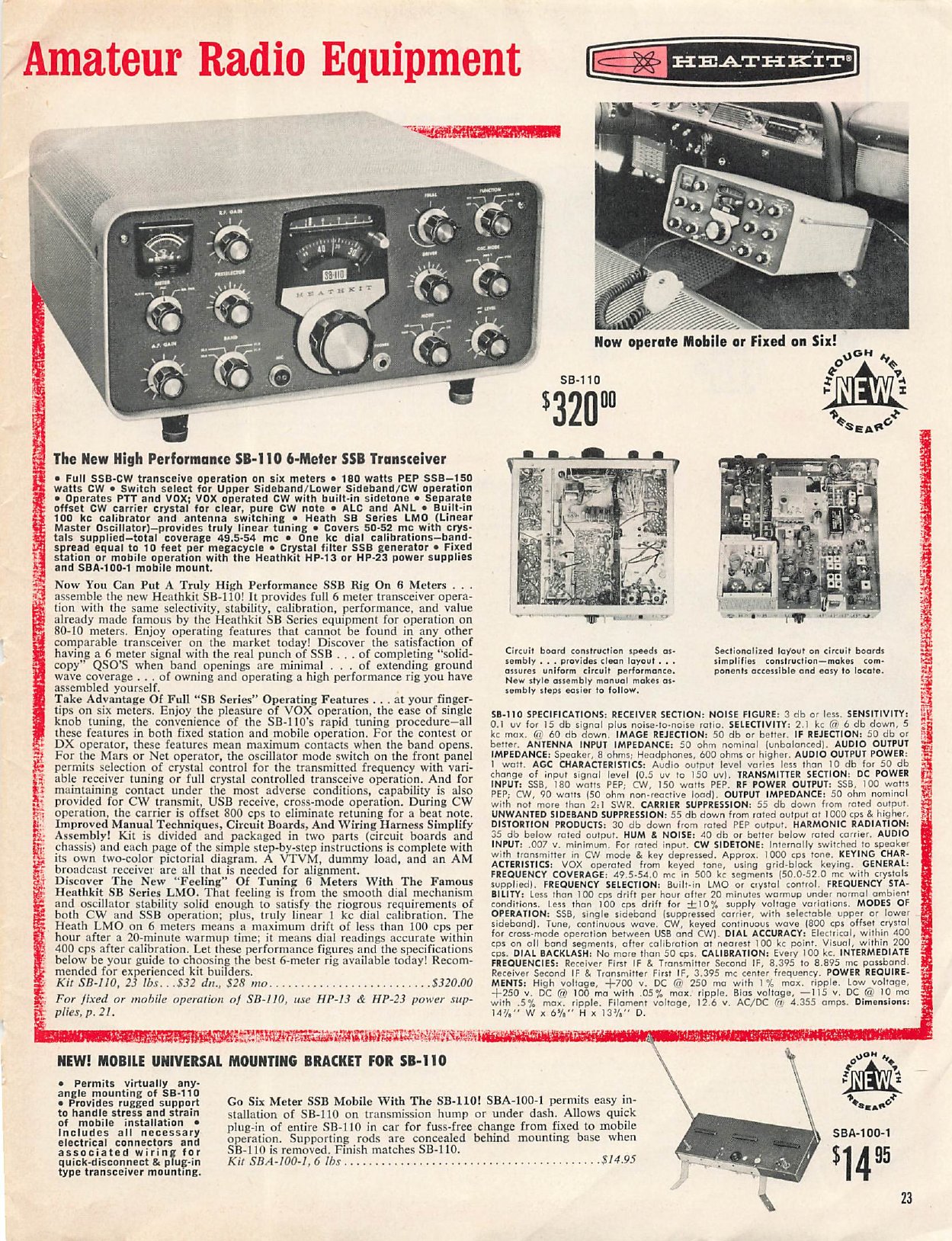
The SB-110 and SB-110A (1965 and 1969). Alongside the HF transceivers Heath sold a six-metre relative with the same styling and the same system of pre-built LMO and crystal heterodyning. The SB-110 appears as “NEW” in catalogue 800/55 of 1965 at $320, rated 180 watts PEP on SSB and 150 watts on CW; Eckweiler gives its coverage as the lower two megahertz of the band. It became the SB-110A in 1969 at $299 and was last found in the 1971 catalogue, still at $299 (1971 catalogue, p. 80). Its LMO, part 110-28, was another 6BZ6 design. The SB-110A is the nearest the SB transceiver ever came to VHF; it shares the SB-102’s mobile mount and power supplies but not its circuit boards.
1.3 The SB-102 arrives
The SB-102’s first catalogue appearance is the summer 1970 mail-order catalogue, 800/03, under the banner “NEW Heathkit SB-102” at $380, less speaker (catalogue 800/03, p. 54). Heath’s headline for it was “The World’s Best Rig (the SB-101) Is Now Even Better… New ‘102’ Features Solid-State LMO For Faster Warmup, Better Stability… New Receiver Circuitry For Improved Sensitivity”. The assembly manual carries a 1970 copyright, and the first factory service bulletin for the model, SB-102-1 on meter zeroing, is dated 25 November 1970, so kits were in customers’ hands that autumn (SB-102 service bulletin list, compiled by W7LPF).
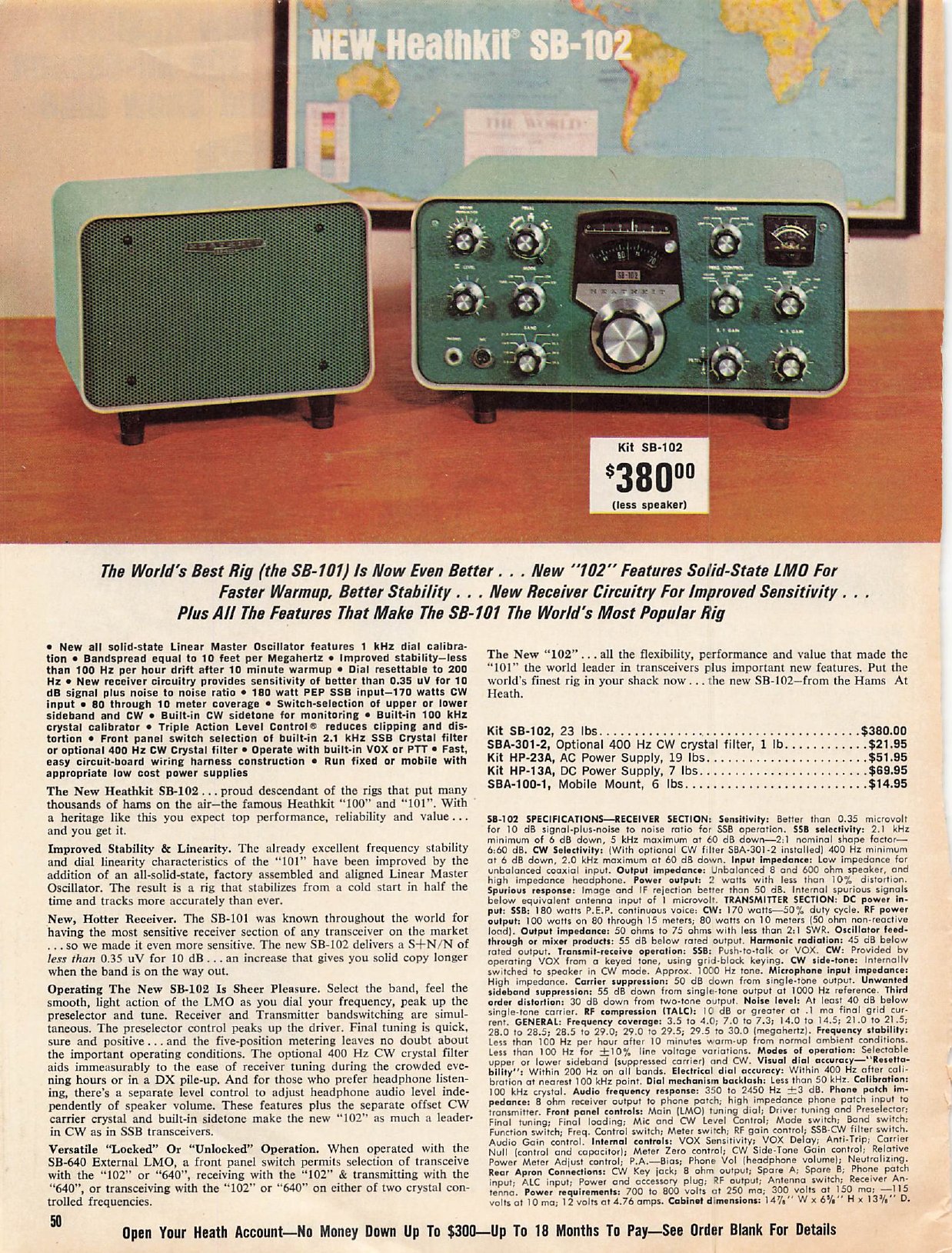
One widely read history dates the SB-102 to 1967 (EEJournal, February 2025). The catalogues contradict that: the 1968, 1969 and Winter 1970 catalogues all still sell the SB-101, and the SB-102 appears only from summer 1970. The site history dive already notes the discrepancy.
What the SB-102 changed, according to Heath’s own copy and the manual, comes down to four things.
- The LMO. The tube LMO gave way to “an all-solid-state, factory assembled and aligned Linear Master Oscillator”, Heath part 110-48, with its own small regulated 10-volt supply fed from the heater line. Heath promised that the rig “stabilizes from a cold start in half the time and tracks more accurately than ever”. A dial “resettable to 200 Hz” was the other selling point.
- The receiver. A 6HS6 replaced the 6AU6 as RF amplifier, and the sensitivity figure went from “less than 1 microvolt for 15 dB” to “less than 0.35 microvolt for 10 dB”. Heath’s copy: “The SB-101 was known throughout the world for having the most sensitive receiver section of any transceiver on the market… so we made it even more sensitive.”
- Driver tracking. A diode-switched capacitor in the second transmitter mixer’s plate circuit compensates for the Miller effect, so the DRIVER PRESELECTOR peaks at the same setting in receive and transmit. Earlier sets needed the SBM-102-1 modification kit to get this; Eckweiler lists that kit for the SB-100, the SB-101 and SB-102s with serial numbers below 5446.
- Small conveniences. The SB-102 added a separate headphone volume control, a DRIVER OUTPUT jack for the SB-500 two-metre transverter, and a regulated LMO supply that switches over to the crystal oscillator when the FREQ CONTROL switch calls for it.
Everything else is recognisably SB-101: the 180-watt pair of 6146 finals, the TALC level control, the switch-boards, the circuit-board harness construction, the cabinet with its hinged lid, the external power supply and the eight-crystal heterodyne scheme.
1.4 Who it was for
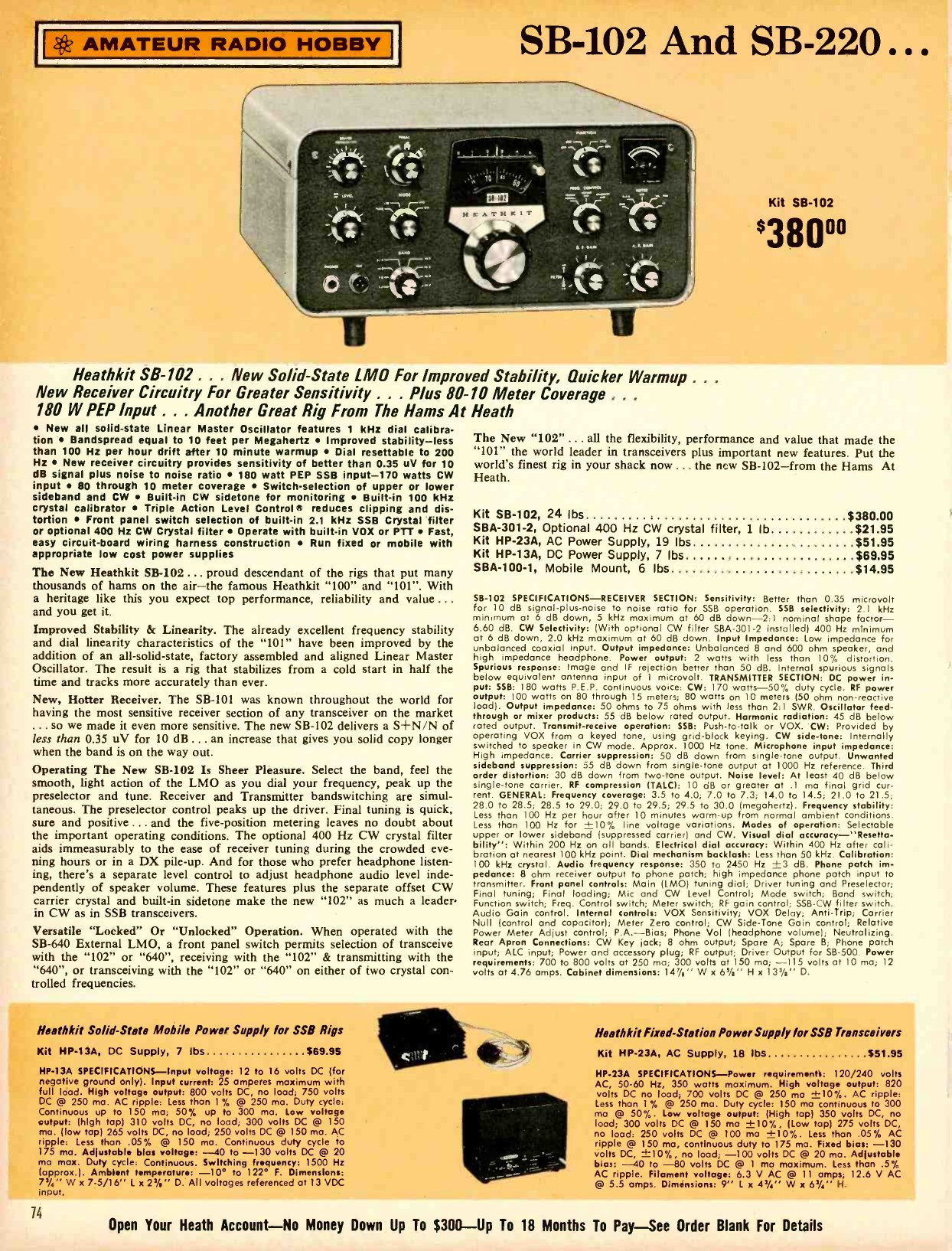
The SB-102 was Heath’s top-of-the-line HF rig for its whole life, and the catalogues sold it to the operator who wanted a serious station rather than a first one. The HW-101 took the beginner’s slot at about two-thirds of the price. The SB-102 copy talks about DX pile-ups, crowded evening bands and CW filters, and it sells the rig as the heart of a matching system: the SB-600 speaker, which had space inside for the HP-23 power supply; the SB-610 monitor scope; the SB-620 spectrum monitor; the SB-630 station console; the SB-640 external LMO; and the SB-200 and SB-220 linear amplifiers. The 1972 catalogue called the SB-102 and SB-220 pair “the world-famous Heathkit SB-102/220 combo” and the “maxi-rig”.
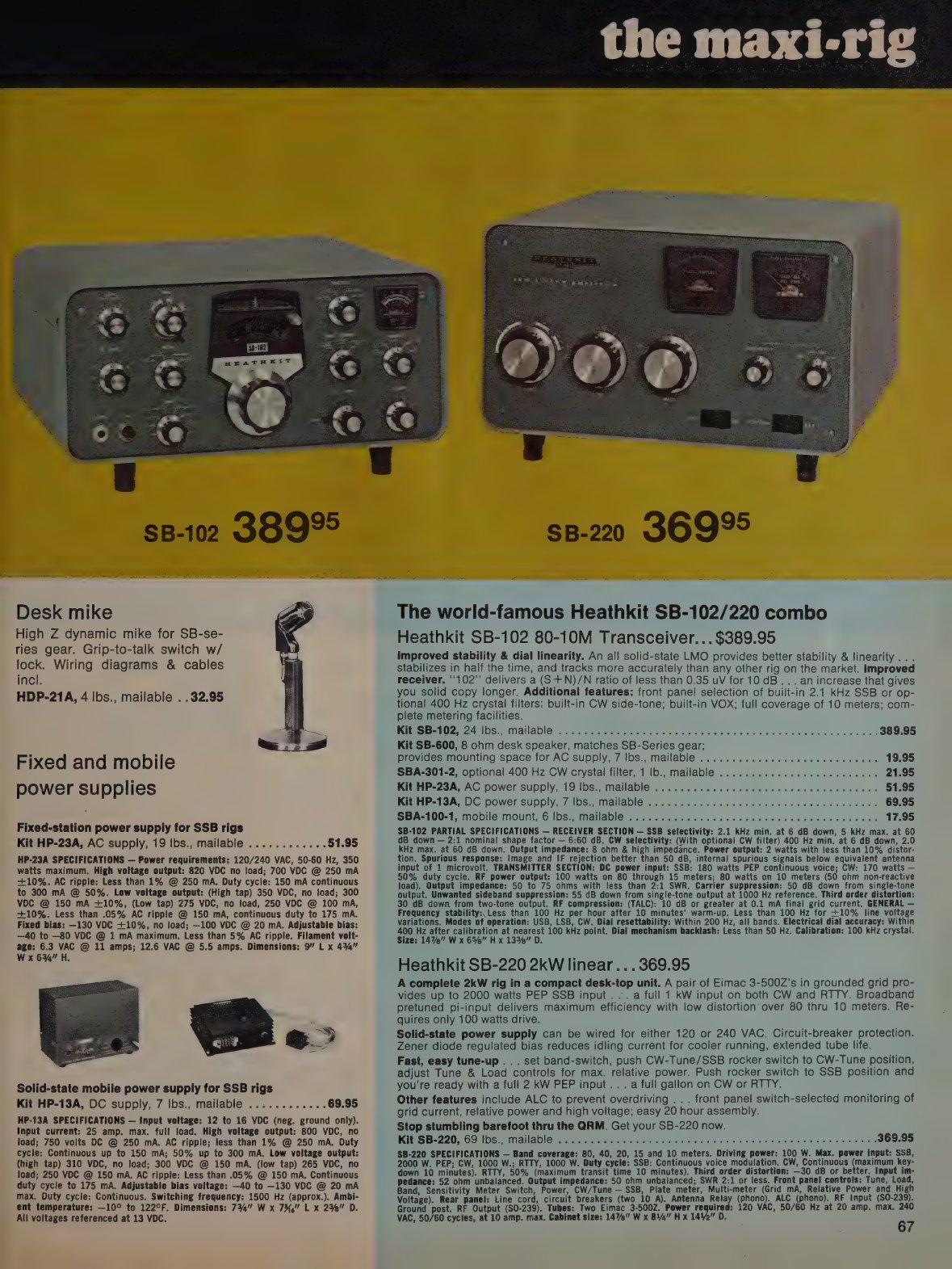
It was also meant to go mobile. The transceiver weighs 17½ pounds without its supply, the HP-13 series inverter runs it from a car battery, and the SBA-100-1 bracket lets it be lifted in and out of a car. The manual gives several pages to mobile installation, antenna loading and ignition-noise suppression.
1.5 Prices and years in the catalogue
Table 2 — Prices and years in the catalogue
| Catalogue | SB-102 kit price |
|---|---|
| 800/03, summer 1970 | $380.00 (introduced) |
| 1971 general catalogue | $380.00 |
| 810/72 (1971–72) | $389.95 |
| 810/73 (1973) | $385.00 |
| 810/74 (1974) | $385.00 |
| Christmas 1975 | not listed; the SB-104 has replaced it |
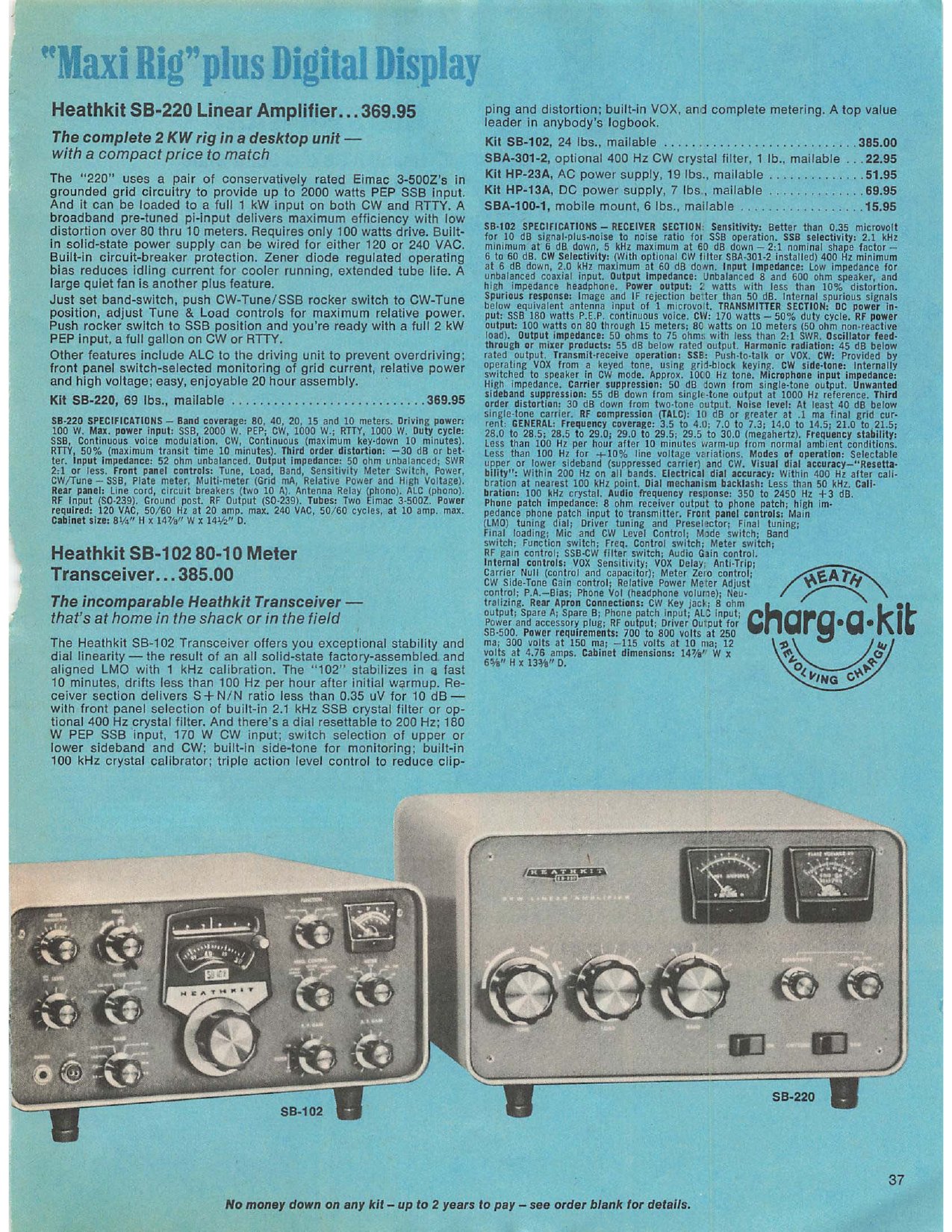
The price hardly moved in four years, which for a Heath product of the early 1970s is unusual. The last catalogue found that lists the SB-102 is the 1974 annual catalogue, 810/74, where it appears as “The incomparable Heathkit SB-102 80-10 Meter Transceiver… 385.00” (catalogue 810/74, PDF p. 41). By Christmas 1975 the solid-state SB-104 had taken over the SB name; of the original SB line only the SB-401 transmitter, the solid-state SB-303 receiver, the SB-600 speaker and the SB-200 and SB-220 amplifiers were still offered. The dates commonly given for the SB-102, 1970 to 1975, fit these catalogues if production ran on after the 1974 catalogue, which is how the dive treats them (Radiomuseum). Factory service bulletins continued long after the kit left the catalogue: the last in the compiled list is SB-102-30, dated 21 September 1984.
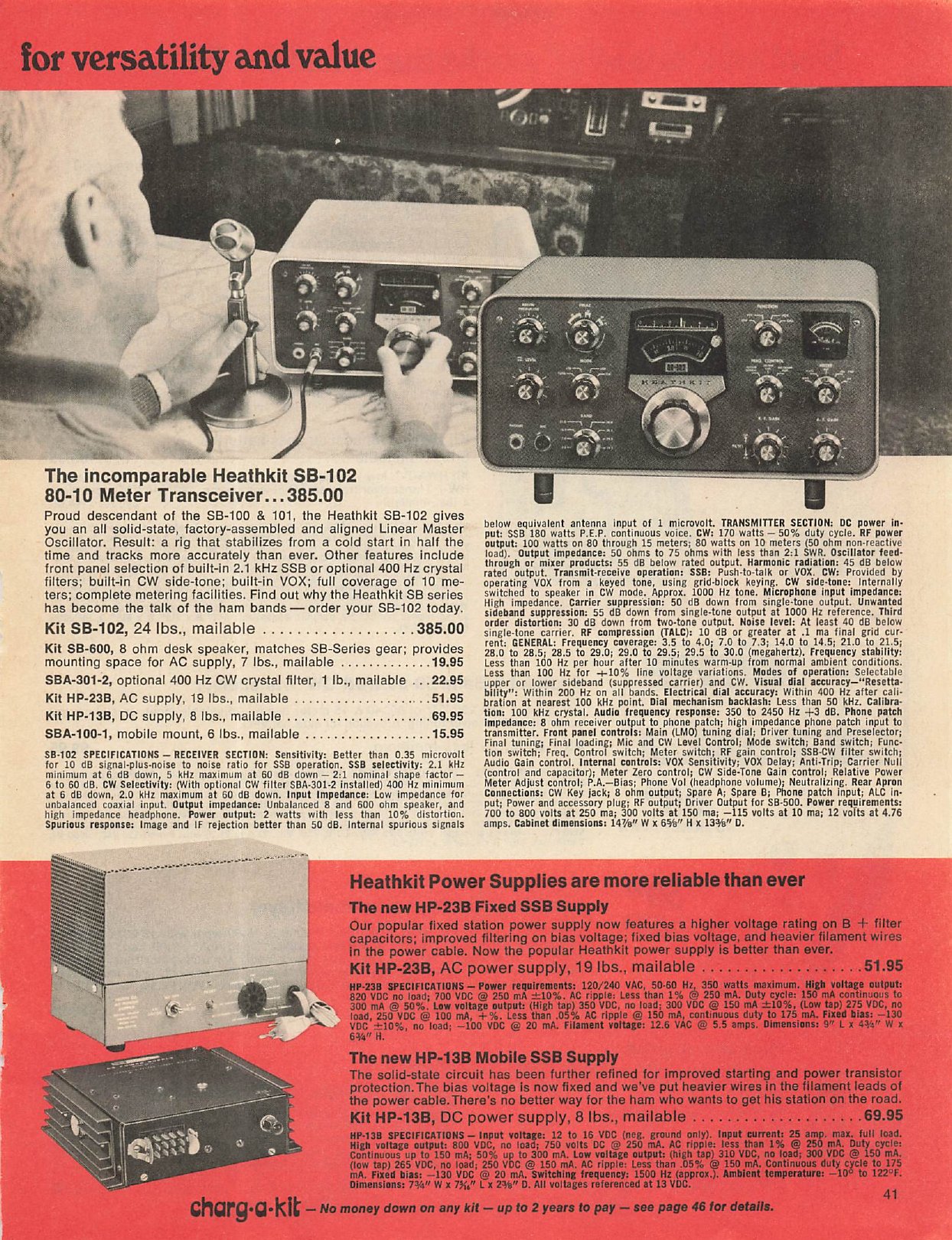
No Heath production figure for the SB-102 has been found. The serial-number break of 5446 that Eckweiler gives for the SBM-102-1 modification shows that at least several thousand were built. The often-repeated claim that it was “the most successful SB-series transceiver” appears on collector sites without a stated source.
1.6 The SB-102 and the HW-101
The HW-101 was introduced a few months after the SB-102 and was, in the words of the restoration manual used throughout this dive, a “cost-reduced version of the SB series” that shares “a number of components and design elements” with it. The two rigs have the same frequency scheme, the same crystal filter, the same finals, the same eight heterodyne crystals on the same crystal switch-board (85-132-1), the same heterodyne, driver-grid and driver-plate switch-boards, and the same power supplies. The HW-101 gave up:
- The LMO. In its place is a builder-assembled FET VFO with a 5 kHz dial and a Jackson ball drive, instead of the SB’s sealed LMO and 1 kHz circular dial driven by a pinch roller on a metal ring.
- The FREQ CONTROL switch. Without it there is no auxiliary crystal oscillator and no external-LMO operation.
- Some metering. Slide switches replace several rotary switches, and there is no grid-current or high-voltage meter position.
- Several controls. The HW-101 has no headphone volume control, no CW sidetone volume control and no relative-power adjustment.
- The cabinet. A plainer two-piece cabinet replaces the SB’s one-piece case with its hinged lid.
In 1971 the difference was $249.95 against $380. The HW-101 then outlived the SB-102 by nine years in the catalogue. The HW-101 has its own dive, whose circuit volume describes the shared stages in detail; this dive covers what is particular to the SB-102 and refers there for the rest.
The SB-102’s other siblings have dives of their own. The separate receiver and transmitter of the same generation are covered in the SB-301 and SB-401 station dive, and the solid-state successor in the SB-104A dive.
1.7 The SB-102 as a machine to own
Owners’ reviews are consistent on what the SB-102 does well and what it lacks. Of 36 reviews on eHam, averaging 4.1 out of 5, the positive ones single out stability, the 400 Hz CW filter, the AGC, and receive audio that one reviewer compares with a modern high-end transceiver; one owner describes a rig that will “stay parked where you put it, separate adjacent stations nicely” and “work every time you turn it on”, once it has been gone through (eHam reviews). The complaints are just as consistent: there is no receiver incremental tuning, and the plastic circular dial is prone to hairline cracks. The restoration volume returns to both.
The SB-102 is also one of the few kit transceivers of its era whose most critical part was never in the builder’s hands. The LMO was aligned and sealed at the factory, and the manual warns that opening it voids the warranty. Every other stage can be reached, measured and repaired with a meter, a signal source and the manual, which is why so many still work.
Sources
- Heathkit Assembly Manual, SSB Transceiver Model SB-102, part 595-1058-06 (Heath Company, copyright 1970), including the specification pages 131–134 and Circuit Description. Full scan: W5RKL; partial scan with the Heath (Gloucester) specification sheet: Internet Archive
- Heathkit catalogues, World Radio History: 800/55, 1965 · 800/62, March 1966 · 1967 · 1968 · 1969 · 800/03, summer 1970 · Winter 1970 · 1971 · 810/72 · 810/73 · 810/74 · Christmas 1975
- Eckweiler, Bob (AF6C). “Heathkit of the Month #30: The Amateur Radio SB-Line Overview.” RF (OCARC), June 2011. PDF
- Kembel, Robert W. (W5RKL), and contributors. Heathkit HW-101 and SB-10x Restoration and Troubleshooting, revised 17 December 2021, sections a.3 and af.1. PDF
- Lutz, Joseph W. (W7LPF). “Heathkit Service Bulletins: SB-102,” Heath mailing list, 3 April 1998. Archive
- Leibson, Steven. “‘H’ is for Heathkits and Hams, Part 2: The 1960s.” EEJournal, 5 February 2025. Link
- eHam.net, product reviews for the Heathkit SB-102 (36 reviews). Link
- Radiomuseum.org, Heathkit SB-102 entry. Link
Comments (0)